Advertisement
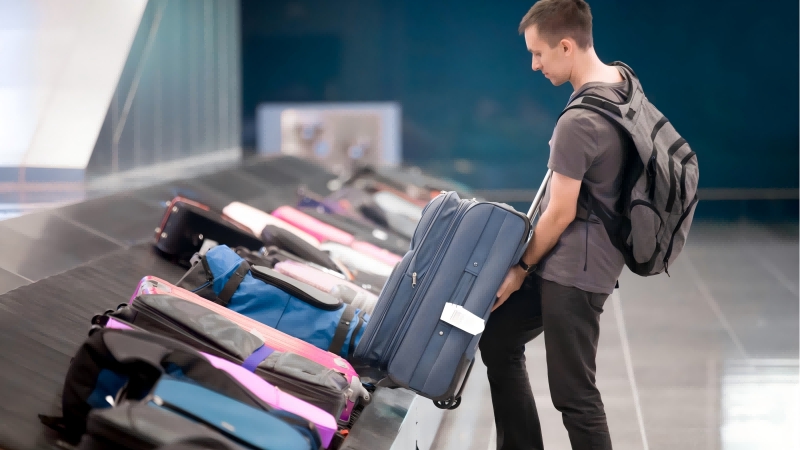
The good moments of a trip can be greatly diminished by lost luggage. Luggage has clothes, daily necessities, and even some precious souvenirs from your trip. When you realize your luggage is missing at the airport, you may feel upset and helpless, but by knowing the right steps to claim, you can get help quickly. Next, let's talk about what to do when your luggage is lost, so you can handle the situation even if it happens.
What's the first step to take when you realize your luggage is missing?
1. Calm down: Don't panic when you realize your luggage is missing. Lost luggage is not uncommon, and airlines have procedures in place to help you find your luggage or provide compensation.

2. Go to the baggage service counter: Every airport has a counter that specializes in baggage issues, usually located near baggage claim. Find the appropriate airline counter and explain the circumstances of your lost baggage.
3. Provide baggage information: Give your boarding pass and baggage voucher (usually attached to your boarding pass) to the staff. The check-in voucher has a unique baggage tag number, which the staff will use to find your baggage information.
Registering a Lost Baggage Report
At the baggage service counter, you need to fill out a lost baggage report (usually called PIR, i.e. Property Irregularity Report), which is very important for subsequent baggage tracing and claiming.
1. Fill in the detailed information: the report usually asks for information such as the color, size, brand and appearance of the baggage, so try to provide a detailed description to make it easier for the staff to find it.
2. Keep a copy of the report: After completing the report, remember to ask for a copy and keep it in a safe place. Many airlines require this report as proof for future claims.
3. Get a tracking number: Some airlines will provide you with a tracking number so that you can track your baggage over the next few days. Some airlines also offer an online tracking service where you can enter the tracking number to check the latest status.
Understand the airline's process
Each airline has a slightly different process for handling lost luggage, but it is generally categorized into the following situations:
1. Delayed baggage: Baggage is delayed, not lost. Usually, the airline will deliver the baggage to your check-in location as soon as it is found. If the baggage is found within 24 hours, it will be delivered directly without you having to return to the airport to collect it.
2. Baggage recovered but damaged: If your baggage is found broken when you recover it, you can also file a claim with the airline. Generally, the airline will compensate for damage caused by transportation, and the exact amount will depend on the situation.
3. Loss of baggage: If the baggage is not found within a certain period of time (usually 21 days), the airline will consider the baggage to be completely lost, and you can then claim for financial compensation. The maximum amount of compensation varies from airline to airline and is usually based on the International Air Transportation Association (IATA) or relevant treaty provisions.
Applying for interim compensation

While waiting for your baggage to be recovered, airlines usually provide some temporary compensation to help you buy essentials, such as clothing and toiletries.
1. Inquire about the amount of compensation: Different airlines have different standards for temporary compensation. Some airlines offer a fixed amount of compensation, while others are reimbursed.
2. Retain proof of purchase: No matter what necessities you have purchased, remember to retain all small bills and invoices for future reimbursement to the airline.
3. Ask if there is spare baggage: Some airlines provide “emergency kits” with some basic toiletries and clothing in case of lost luggage. You can ask if this service is available to temporarily relieve the inconvenience of not having your luggage with you.
How to make an official claim quickly
If, after a few days of waiting, it is confirmed that your luggage is completely lost, the next step is to make a formal claim. Here are a few key steps:
1. File a claim: You can usually file a formal claim 21 days after your baggage is lost. Prepare a copy of your lost baggage report, boarding pass and relevant vouchers.
2. Provide a baggage inventory: The airline may ask you to make a list of the items in your baggage and the value of each item. Try to list as much detailed information about the items as possible and attach invoices or receipts that prove the value of the items. If you do not have a receipt, you can also take photos or explain the items.
3. Submit materials on time: Airlines usually have a deadline for claims, such as 30 days from the date of confirmation of loss. Make sure you submit the materials within the time limit to avoid affecting the progress of your claim.
Calculation of baggage compensation amount
The amount of compensation for lost baggage will be based on relevant international regulations and airline policies. Usually, the compensation amount is determined by the following items:
1. Value of baggage items: Generally speaking, airlines will not compensate all the items in the baggage in full, but give a certain percentage of compensation according to the declared value of the lost items. For valuable items (such as jewelry or electronic equipment), they are usually not included in the compensation.
2. International standard: According to the Montreal Convention or Warsaw Convention, the baggage compensation limit for international flights is usually around US$1,000 to US$1,500. However, if you have purchased baggage insurance beforehand, the compensation amount may be increased.
3. Whether to purchase additional insurance: Some travelers will choose additional baggage insurance when purchasing tickets. If you take out insurance beforehand, the insurance company may provide you with a higher compensation amount. You can contact the insurance company to know the specific compensation process.
How to Prevent Lost Luggage
Although baggage loss may not be completely avoidable, there are some measures that can reduce the risk of baggage loss:
1. Choose direct flights: Try to choose direct flights to minimize the number of connecting flights. Lost baggage often occurs on connecting flights, especially if the connecting flight is short. 2.
2. Label your luggage: Put a visible logo on your suitcase or tie on a brightly colored strap for easy identification by you and airport staff. You can also place your contact information card inside the suitcase so that the staff can contact you when they find your luggage.
3. Pack your carry-on luggage in advance: Place some essential items in your carry-on luggage, such as toiletries, a change of clothes and important documents. This way, even if your checked baggage is lost, you will have enough emergency supplies.
4. Use a baggage tracker: There are small baggage trackers on the market today that can be placed inside your suitcase. With the help of mobile apps, you can track the location of your luggage in real time.
Lost luggage is undoubtedly a hiccup in traveling, but the inconvenience can be greatly reduced by knowing how to react and taking appropriate measures. Remember to stay calm when you realize your luggage is lost, head to the baggage service counter at the first opportunity, fill out a loss report, and learn about your airline's compensation process and policies. With these tips in hand, you will be able to face the situation of lost luggage with ease. We hope every traveler can travel easily and enjoy a wonderful journey!





Advertisement
Advertisement